Waste Water Recycling Project
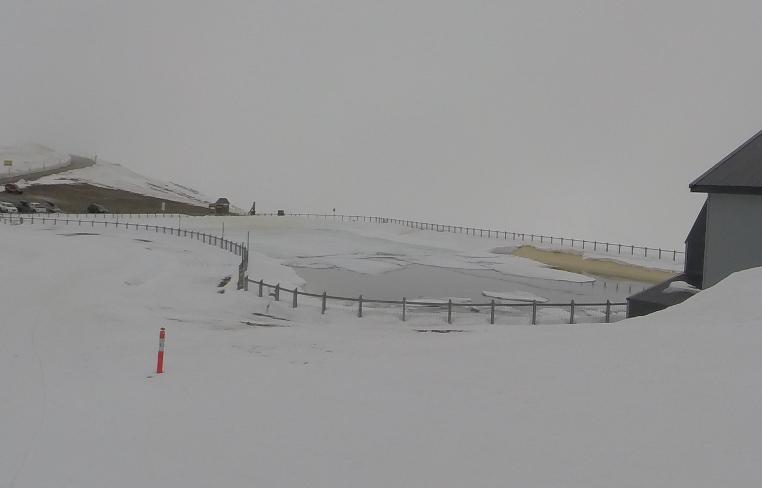
In 2008 a $8.4 million water project was launched on Mt Hotham which would see more water saved and a greater potential for snowmaking. As part of the project, water is now treated and re-used for snowmaking on the mountain. The high quality waste water (class A, rated by the EPA) , saves 80-110 million litres of fresh stream water per year, As the snow machines no longer need to rely as heavily on fresh water. Ninety per cent of the water for snow machines is now supplied by the recycled water program.
The Step by Step process
- The waste water is treated using two key steps at a treatment plant on Mt Hotham, Class A water is the end product.
- This treated water is then collected in a holding tank and pumped into Loch dam (pictured above) via a 3.5 Km vertical pipe.
- The Loch dam storage reservoir can hold 30 million litres of water
- This class A water is then re-used for snow making.
- It is expected that this project will produce a bare minimum of 60 million litres per year.
- Each snow season approximately 70-120 million litres of water is needed for snowmaking.
On a similiar note: Another linked project is underway which would see the installation of another pipe to distribute Class A water to lodges. This project which is due by aprox 2020, would see 30% of lodges using class A recycled water to flush their toilets.
Snowmaking
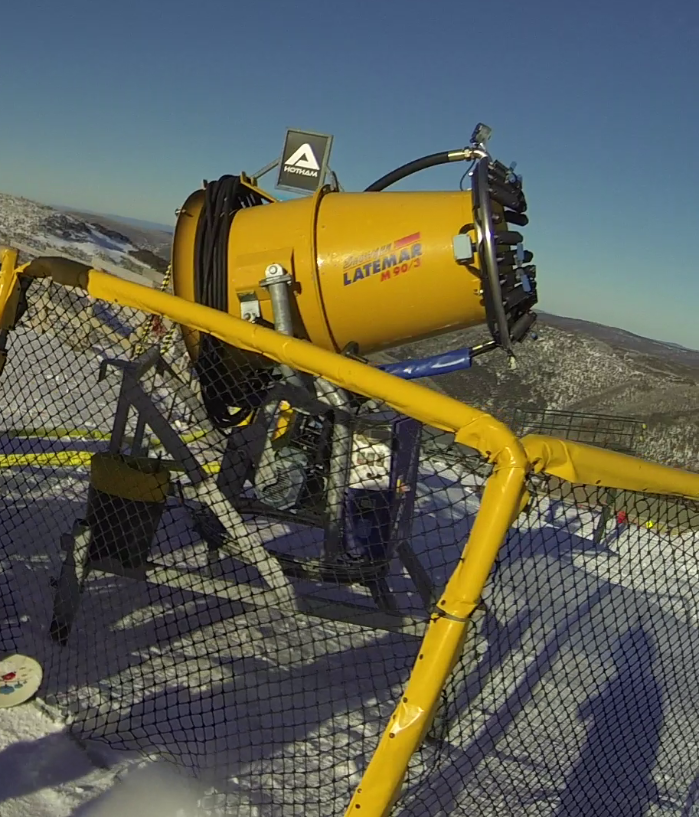
Snowmaking is used extensively throughout the Hotham alpine resort, to increase the amount of snow on the slopes. The resort has 82 fan snow guns, which service 25ha of the slopes on Mt Hotham. The snowguns are fully powered by green energy and use 90 % class A recycled water from the Alpine dams(in particular Loch's dam). The other 10% is taken from fresh water streams. These snowmaking machines use aproximately 70-120 million litres of water per year.
Metal Stairs
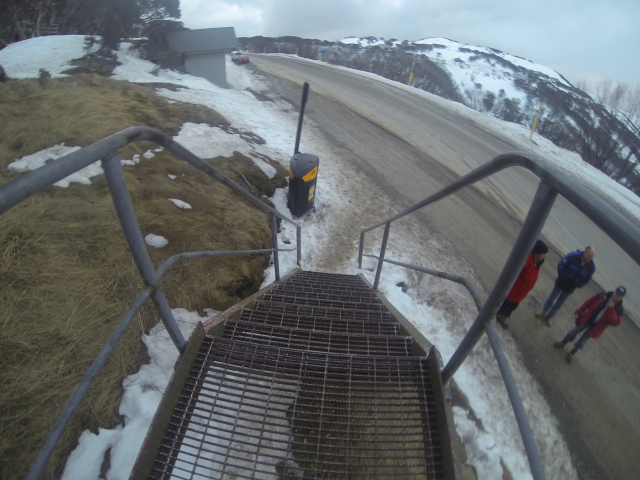
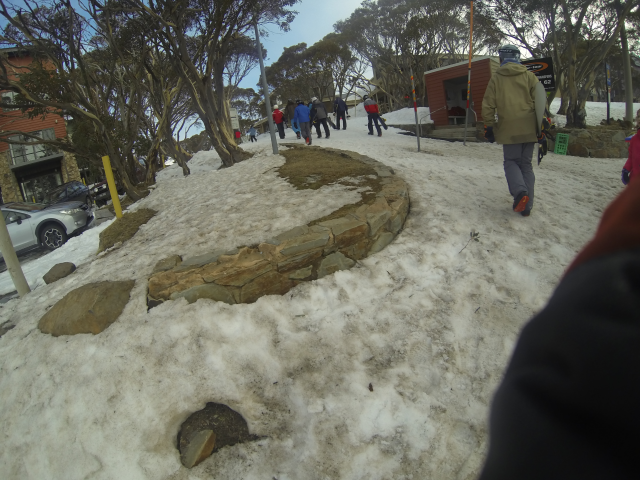
These stairs link most busy paths (on steep sections) to the road, throughout Hotham village. They are a long-lasting sustainable structure, which will ensure that the flora is not damaged through erosion. They are a sturdy structure which also ensures the safety of people. As well as stopping erosion, they function to stop people from slipping and falling when they walk down to the road. As is clear from this example, often structures and initiatives such as this, serve an environmental and safety purpose.
Shuttle buses
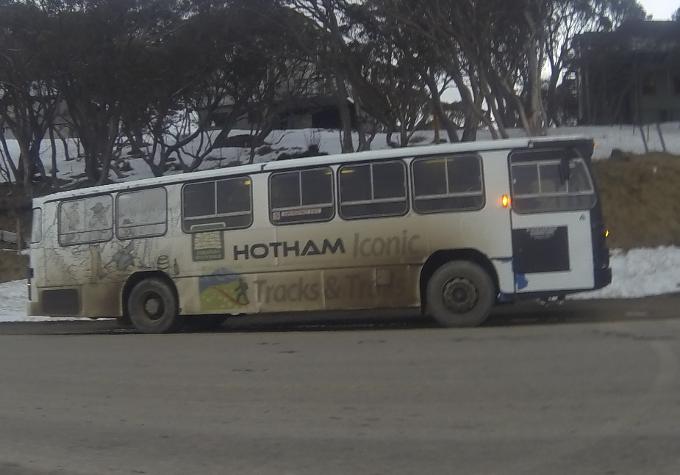
Shuttle buses run from 6:45am to 2am, everyday day of the week (during snow season). They come approximately every 10 minutes and cover 12 signed bus stops. These buses have many key positives:
- They reduce congestion throughout the village, by providing free transport.
- They reduce pollution, people almost always take the bus, if they are staying on the mountain, rather than drive
- It costs money to drive a car on the mountain, so you save money as the buses are a free service
- They also reduce the need for more carparks throughout Hotham
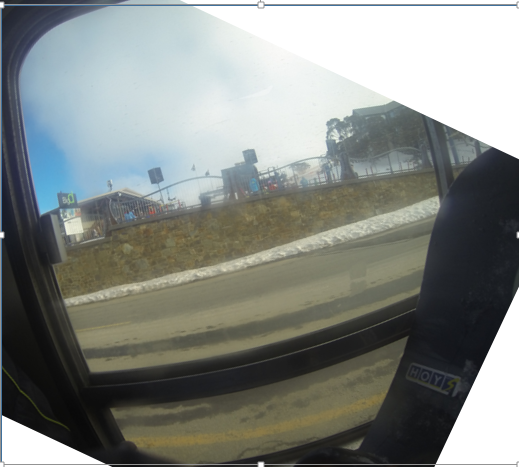
On a different note, these buses are generally painted white as shown above, This means that they blend in. This minimises the visual scarring to the surroundings.
General Waste and Recycling
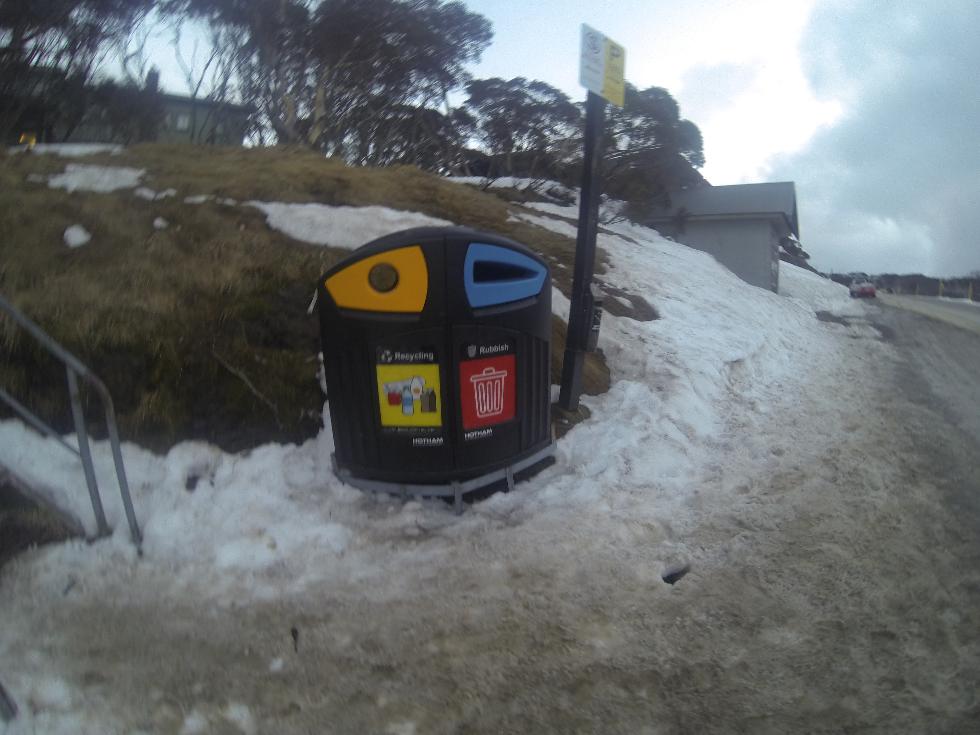
Resort management provide recycling and general waste bins across the whole of Mt Hotham Resort. They are regularly picked up by resort management trucks. These bins are located along the side of the road, in busy areas such as carparks and bus stops, as well as at the bottom of ski runs. This reduces the likelihood of people littering, as there are clear bins, everywhere you turn.
As well as providing these bins the Mt Hotham Resort managementboard provides black rubbish bags for waste and clear plastic bags for recycling. These must be double-knotted.
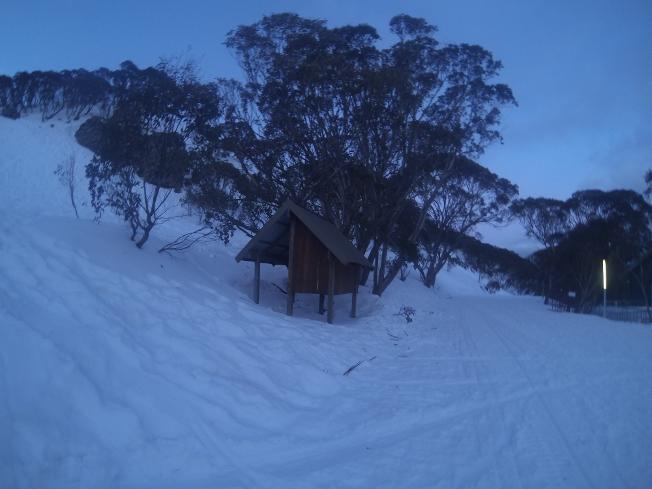
As well as bins for the general public, there are bins located outside lodges and apartments, such as Bembooka. These bins are actually hutches, which residents/members of lodges place rubbish bags in. They are animal proof, to ensure that birds, foxes and other animals can not get in and eat food scraps. These hutches as well as been designed for practicality and functionality blend into the natural environment. They are made of timber and this ensures that they do not create a visual scarring to the area.
The 'Living Bin' Program
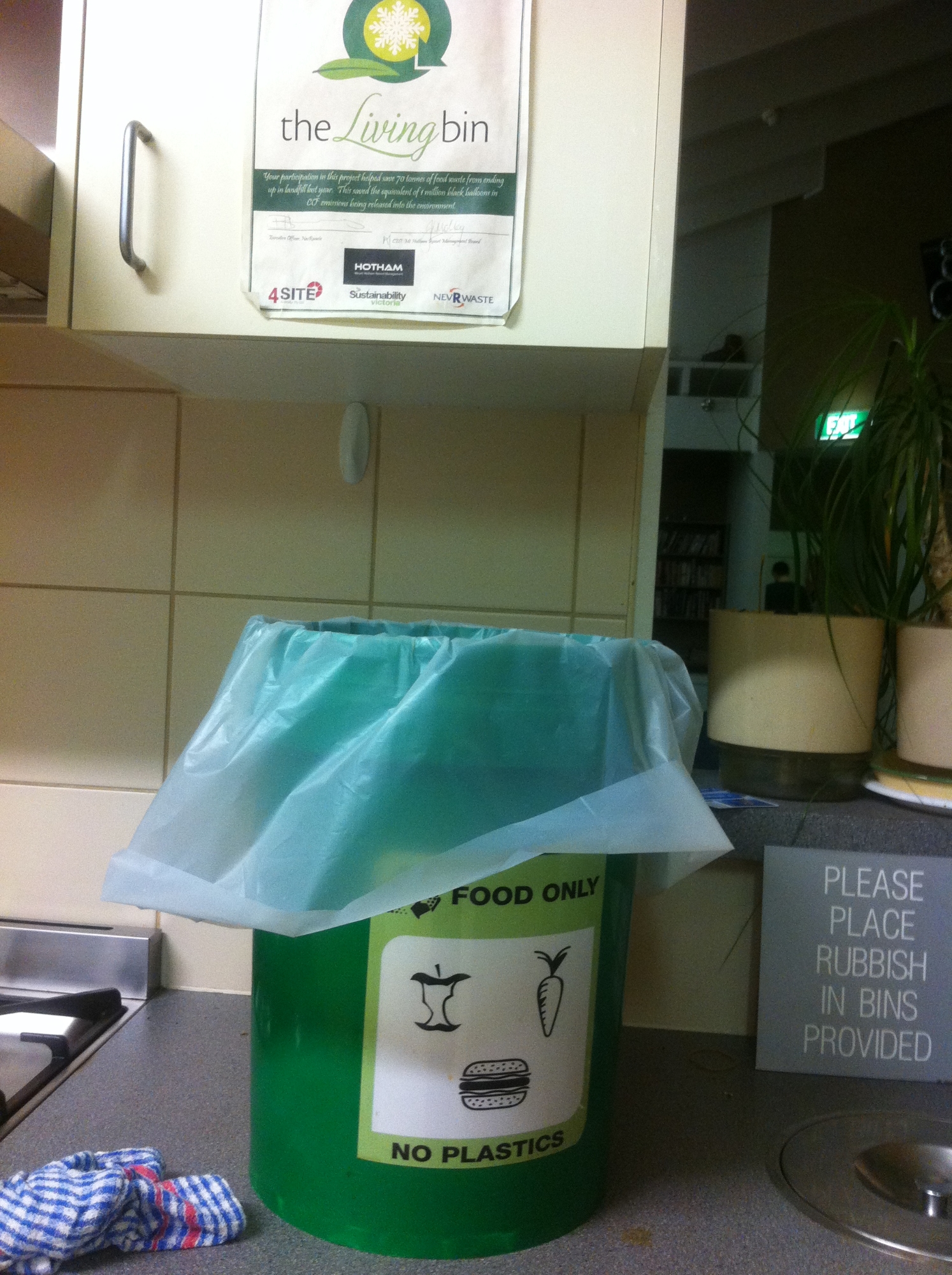
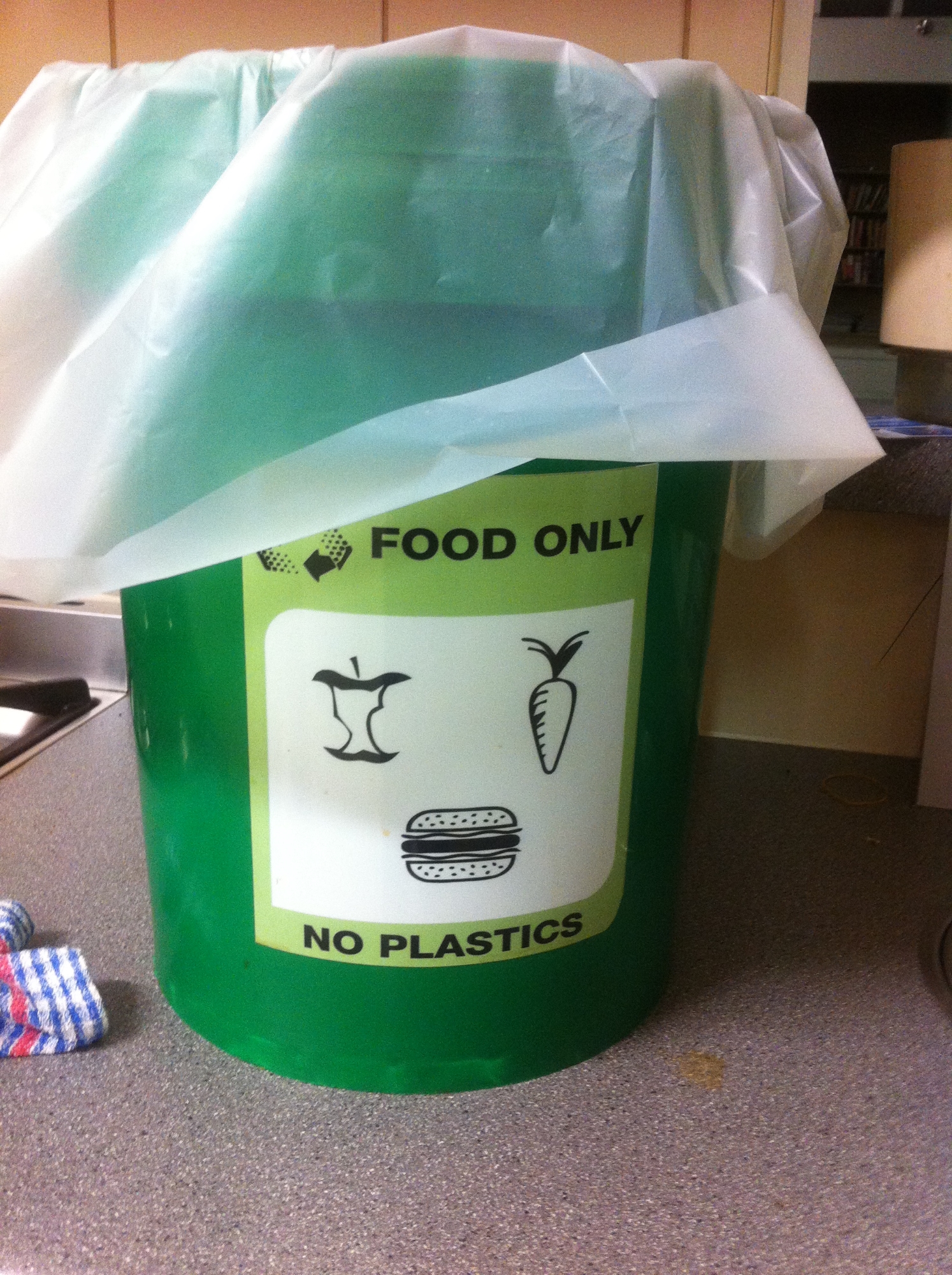
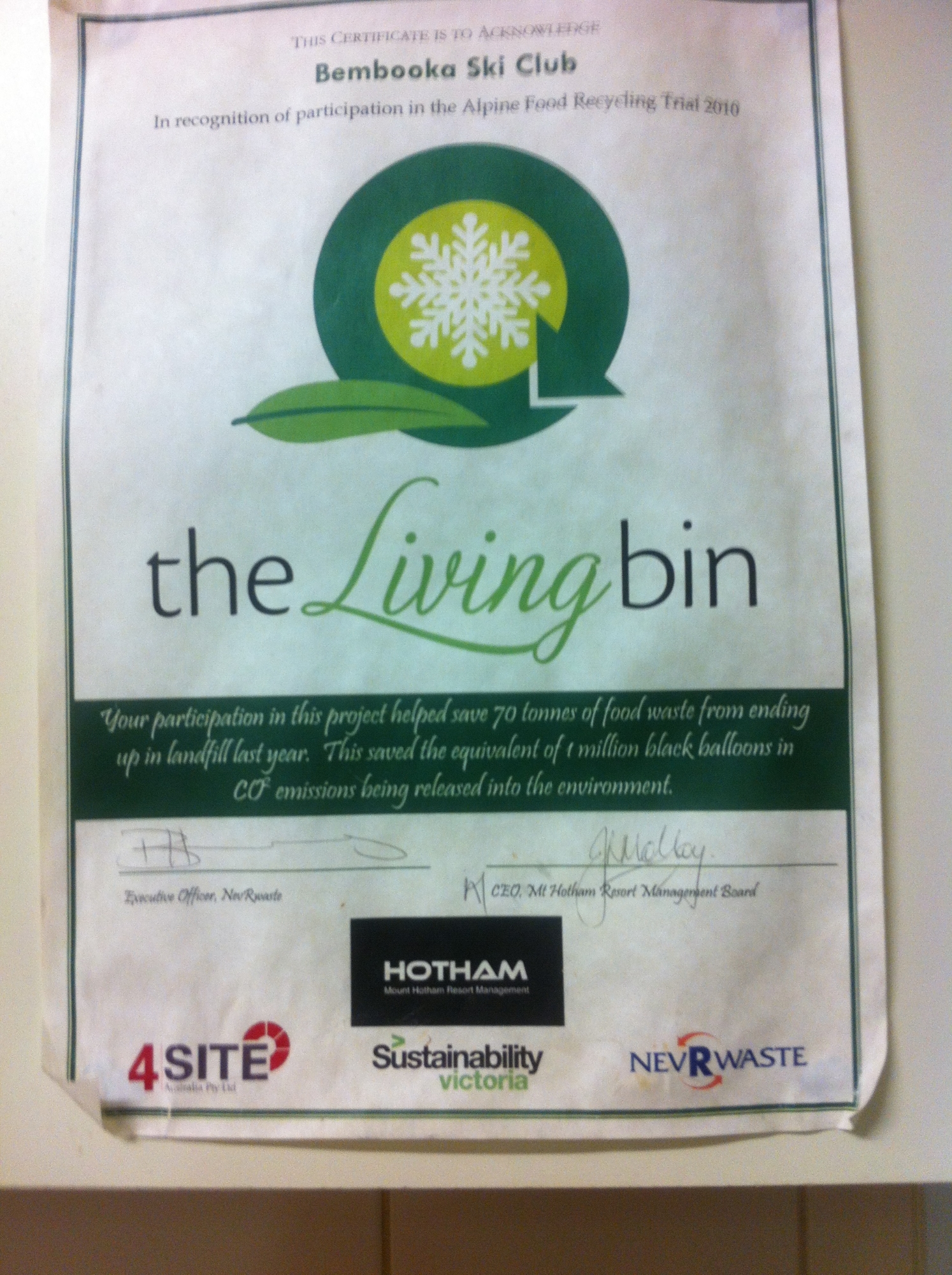
The living Bin project is an initiative currently in place at Falls Creek, Mt Buller, Alpine Shire and most importantly Mt Hotham. The main focus of the program is to recycle food scraps, as aprox 50 % of waste up at Mt Hotham (and other mountains) is food waste. After it has been collected, the scraps are transported to Wodonga, where they are recycled into rich organic compost. This means that scraps which would normally tunr into landfill and release damaging methane gases, are instead recycled. This waste includes any food that could once have been alive. eg beef mince, bananas.
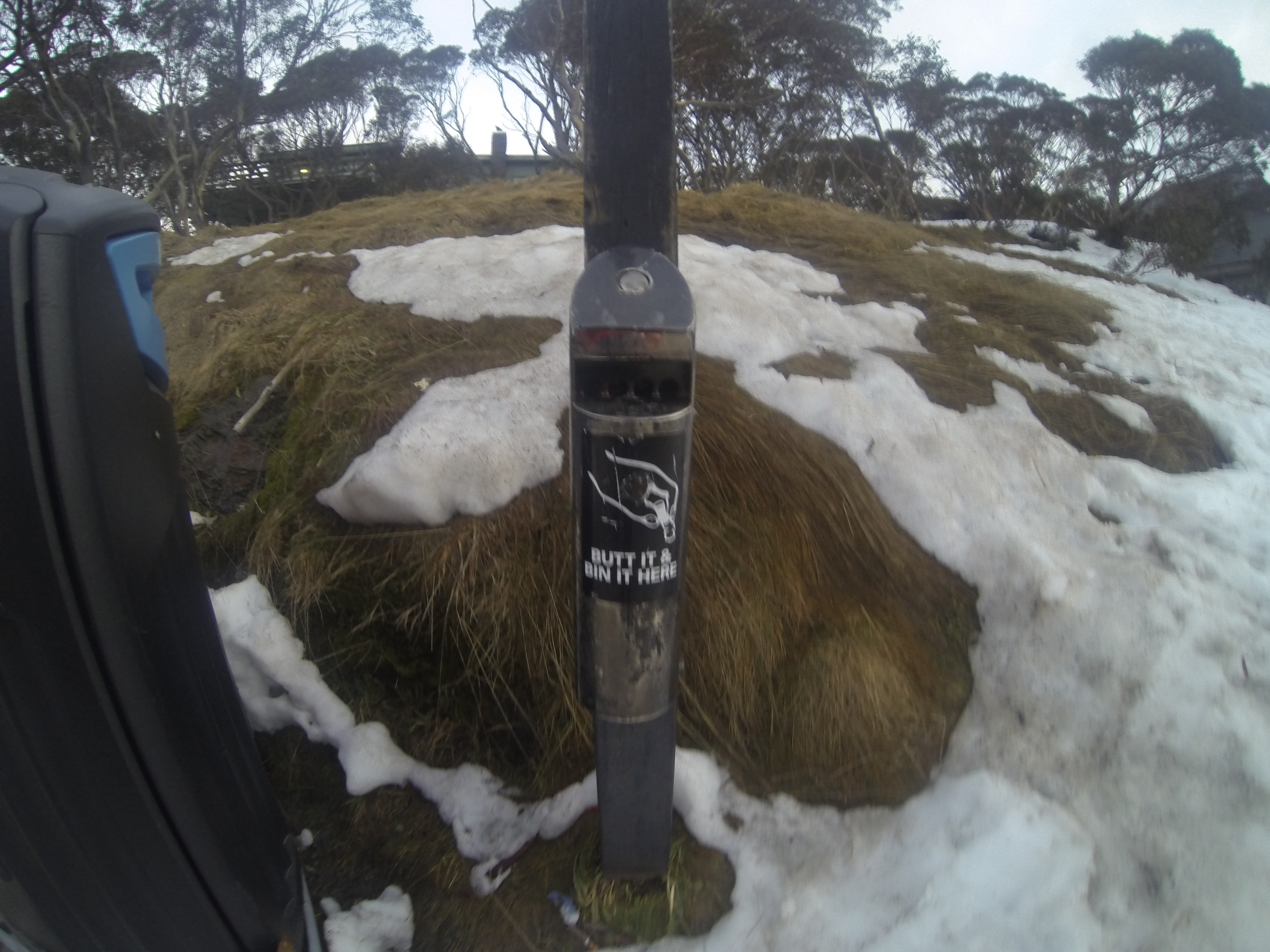
Butt it and Bin it here
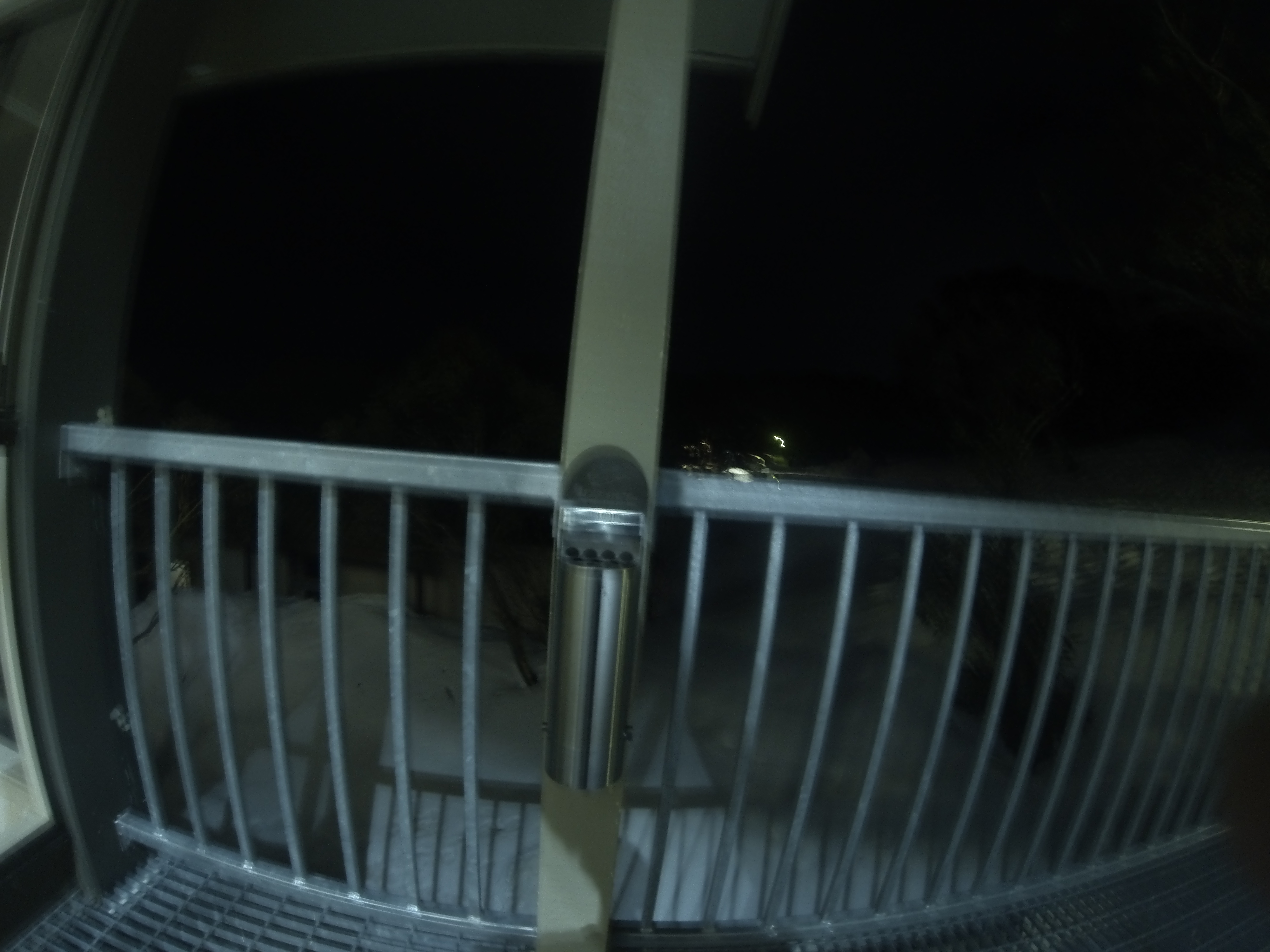
Cigarette butts are a big problem to our environment when they are not disposed of properly. Cigarette butts take 10-15 years to break down and millions are been dropped everyday. Due to the pristine landscape up at Hotham, the board has made sustainability a real focus, another little program the board has taken up is the disposal of cigarette butts. Throughout Hotham cigarette butt bins have been placed in strategic places to ensure they are used. They are placed outside lodges/apartments (this is often the lodge's/apartment's doing, no the board), outside bars and cafes and at the top of most chairlifts. The correct disposal of cigarettes is also reinforced by signs put up throughout the resort. These signs are made to educate people and the 'right' way to dispose of cigarette butts.
Retaining Walls
Retaining walls are placed up at lots of different sections along the Great Alpine Road and throughout Mount Hotham Resort. They are there to ensure no further damage is done to the environment. They stop erosion as well as ensuring the safety of drivers. These retaining walls (such as the one in the picture above, to the left) are very common along roads where part of the mountain has been excavated. Retaining walls are also put in place due to the buildings and infrastructure built on top of them. This extra weight requires extra support, the picture above, to the left, is once again a very good example of a sturdy retaining wall put in place to;
- Stop erosion
- Reduce the strain on the ground, due to the extra infrastructure.
- Ensure the safety of drivers.