Flora
The alpine region of Mt Hotham and Dinner plain is most commonly known for it's Eucalptus forests and open sub-alpine grasslands. These types of flora dominate the higher altitude sections, while lower down there are montane forests, which are primarily made up of the Alpine Ash (Eucalyptus delegatensis).
The montane grassy woodland is a plant community which is now becoming threatened. It is an open eucalpt woodland up to 10m tall, which has a secondary tree layer of shrubs. It has become weaker and is threatened due to the area been dominated by snow gums and mountain gums.
List of native birds to look out for while in the Hotham area or in particular Dinner plain:
Gang Gang Cockatoo, Australasian Pipit, Branded lapwing, Grey Fantail, Lyrebird, Crimson Rosella, Currawong, Boobook, Barn owl, little raven, Eastern spinebill, Yellow faced honeyeater, grey fantail and Magpie.
Invasive flora
Gorse
Gorse is an enduring shrub/bush (weed) up to 4m high and 3m in diameter. They are often recognisable by their bright yellow flowers. They are damaging because they reduce native cover and they provide a shelter to pests such as rabbits. They also increase the risk of bush fires due to their flammability. It is an invasive weed with a high potential to spread.
Pets
The resort has some simple rules which act as a deterrent for bringing your domestic pets to the resort. Firstly, there are absolutely no cats. Secondly, to have a dog, you must be a permanent resident and pay a yearly 'registration' fee of $200. These two simple policies ensure that there are not many domestic animals in the area.
Foxes
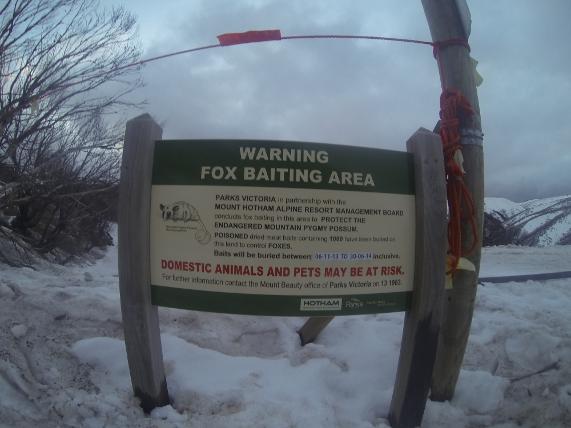
Foxes are a serious issue on Mt Hotham as they are a serious threat to the lives of the endangered Pygmy Possum. PArks Victoria in conjuction with The board have recognised this issue and have implemented a resolution strategy. They have put out poisoned dried meat baits to control the foxes. These baits contain '1080' which is a poison often used to control 'pests' throughout Australia. Animals die aproximately 1-2 days after ingesting the poison.
Mountain Pygmy Possum
The mountain pygmy possum is an endangered species of marsupial which lives throughout the alpine area of Mt Hotham. They live at an altitude of above 1300m to 2200m and feast on moths, fruits and seeds. The unique thing about these nocturnal creatures is that the Males live lower than the females. As Mt Hotham became developed, with roads and paths this became a problem. This problem was recognised and in 1985 a rock tunnel was built to resolve the issue. It was named the 'tunnel of love'. This gave the Male possum's greater access to the females and the population of the possum's in the area, lifted.
What you can do to help the Mountain Pygmy Possum on Mt Hotham?
- Dispose of rubbish carefully, so you do not bring foxes
- Be a responsible pet owner, do not let your dog run free
- Take the shuttle bus, instead of a private car
- Drive carefully at all times
- Learn what a mountain pygmy possum looks like, here is a picture to make it easier: (credit: Freddy Mercay)
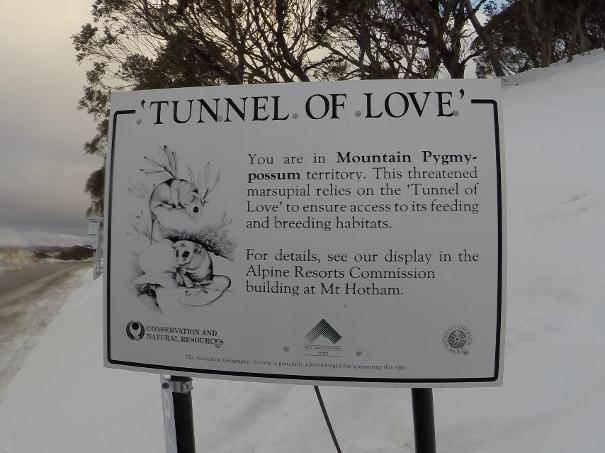
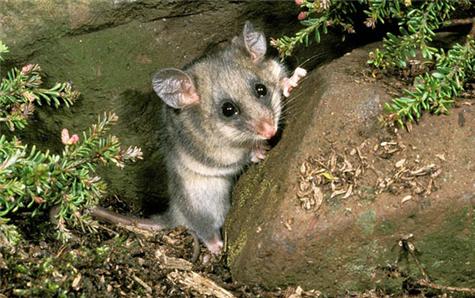
Some of the most commonly sighted mammals in the area are the brush tailed possum, wombats and the Dusky antechinus.
The Dusky antechinus is a carnivorous marsupial mouse.
More Invasive animal species
Rabbits
Rabbits are a massive threat among The Alpine National Park. There are seventeen species at risk from been disturbed by the rabbit. This is the highest number, in a single habitat, in Australia. Their population is still thought to be increasing.
Goats
Feral goats are a massive environmental threat due to their damaging habbits. They have a massive impact on all environments they live in. Some of the damage they cause includes:
- Damaging soil which leads to erosion and the prevention of regeneration
- The Overgrazing of native trees, grass, shrubs and herbs, which also leads to the prevention of regeneration.
- They contaminate waterholes
- They spread and introduce weeds by seeds carried in their feces
- They compete with native animals for food, shelter and water. This is particularly destructive during droughts
Feral goats are a big problem in the Alpine National Park as populations are increasing and eradication is almost impossible.
Animals in the area
Mt Hotham has a relatively small number of animals, compared to other environments. This is because of the energy flow in the region. Mt Hotham has less fauna then most habitats due to the altitude. This limited amount of fauna means that plants can not convert energy from the sun into chemical energy (this process is also known as photosynthesis). The lower the amount of chemical energy created, the less animals can be supported by that particular food chain.
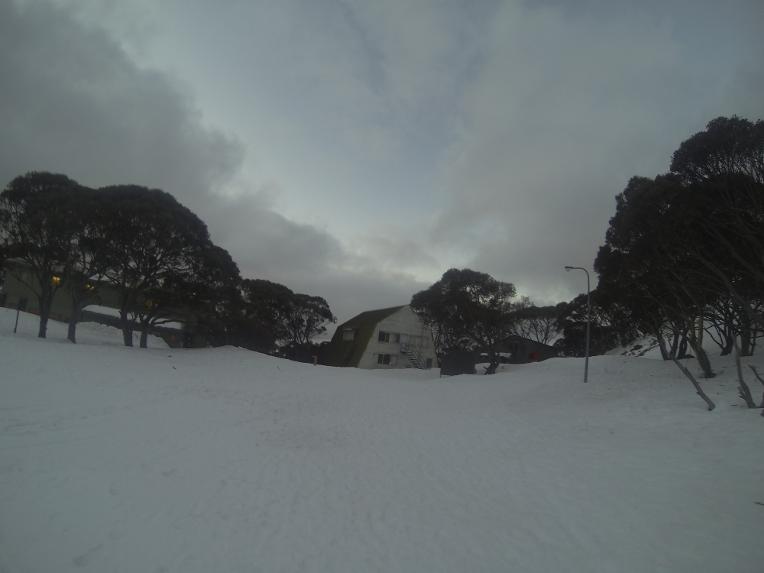
This picture demonstrates the biosphere on Mt Hotham. It gives a clear example of the habitat animals and birds have to live in, to survive on Mt Hotham. As pictured it is a pretty dry, bare environment., which limits the number of inhabitants.
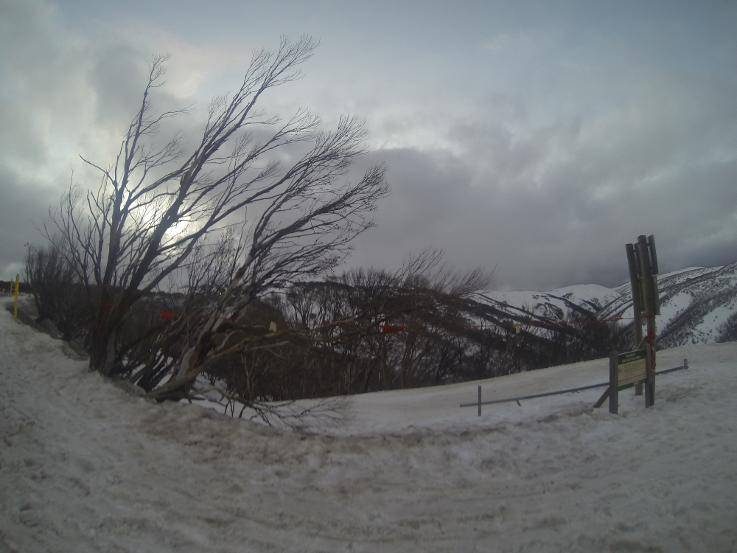
One of the few animals which are regularly seen and heard on Mt Hotham (during the winter) are birds. There are a variety of species which are common to the area including Magpies, kookaburra's, wedge-tailed eagles, currawongs, hawk owl, flame robin, crimson Rosella and honey eaters( a few of these species listed are not common in the winter eg honey eaters). These birds have adapted to the introduction of humans in the area. This is clear by their new scavenging habits. You often see currawong's and magpie's scavenging for food scraps, left by humans. This certainly would not have happened one hundred years ago, as humans did not regularly inhabit the area. These birds have found another reliable source of food through food scraps. This is an adaptation.
ECOLOGICAL ASPECTS
Ecological Community
This is a naturally occurring group of native animals, plants and other organisms interacting (see interrelationships) in a unique habitat. The community's distribution, structure and composition are affected through key environmental factors; terrain, altitude, access to water and weather patterns. Some examples of ecological communities in Australia (as listed by the government) include woodlands, forests, wetlands, cave communities, grasslands, shrub lands, forests, marine and ground springs. Many ecological communities are threatened just like animals. One of the threatened ecological communities in Victoria is the Alpine sphagnum bogs and associated fens community, this is a community prevalent throughout the Australian Alps, in particular Victoria and Southern New South Wales. This community is listed by the Environmental Protective and Biodiversity Conservation act 1999 as endangered and was still listed as endangered when last assessed again in 2009.
Here is a brief summary of the legally protected animals in this community
- Endangered animals include the Southern Corroboree Frog, the Baw Baw frog and the Booroolong Frog
- 'Vulnerable species include the North Corroboree Frog, the Verreaux's Alpine Tree Frog and the Bogong Eyebright (a plant)
- As well as this the Latham's Snipe bird has a 'migratory status'
This community exists in the Hotham area and is quite prevalent around Mt Bogong.
Cycles
There are many different ecological cycles which take place throughout the world. The two we hear the most about are the oxygen cycle and the water cycle. The water cycle can be put into a basic step by step process, which starts where it finishes:
We will start with evaporation.
- Evaporation occurs when the sun heats up water in catchments such as; oceans, lakes or rivers. This water turns into vapor/steam and goes into the air. Working with evaporation, is transpiration, this is when plants loose water via their leaves (it is the equivalent of humans sweating)
- Condensation comes next. This is when the water vapor turns cold and changes back into a liquid, forming clouds.
- After the vapor has been greatly condensed, the air can no longer hold it. The clouds become to heavy and water falls back to the Earth. This water may fall in the form of rain, hail, sleet, freezing rain or hopefully in Mt Hotham's case snow.
- Collection is the last stage in this process. As the water falls back to Earth, it gathers in rivers, oceans, lakes or other water catchments.
- The cycle then repeats
The other key cycle mentioned before, is the oxygen cycle, this cycle consists of two key parts; Animals and plants.
The basic cycle goes like this; Tree's use sunlight and carbon dioxide to produce energy, during the process they release oxygen (this process is called photosynthesis). Animals then breathe in this oxygen and breathe out carbon dioxide. The cycle then repeats.
This diagram is a basic representation of the oxygen cycle.

INTERRELATIONSHIPS
Interrelationships are an integral part of ecosystems. They are the way different species relate and interact with each other. Interrelationships can be broken into five categories: Predatation, competition, parasitism, mutualism and commensalism.
Predatation: is the relationship between the 'predator' and the 'prey'.
Competition: This is when multiple organisms fight for the same recource. This does not mean they have physical interactions, it may just be that the Mountain Pygmy possum and the flame robin eat fruits from the same bush. Although they do not fight they making fewer berries for each other.
Parasitism: This is a relationship between two species, in which one species benefits from the disadvantage of another species. An example is a hair lice living in a dog's hair. Although the dog does not die, it is disadvantaged by the lice.
Mutualism: This is an interaction/relationship in which both species benefit. An example which would be common on Mt Hotham during the summer is the relationship between a flowering plant and a bee. The plant produces nectar which provides a bee with food, while the bee disperses the plant's pollen. Both parties benefit from the interaction.
Commensalism: This is a relationship where one species benefits and the other is not affected. An example on Mt Hotham is a Crimson Rosella nesting in a tree. The Rosella uses the tree for shelter, while the tree is unaffected.
Energy Flow
Energy flow is the amount of energy that moves through a food chain. The largest source of energy for an ecosystem is the sun. Energy/nutrients are passed through a food chain when one species consumes another.
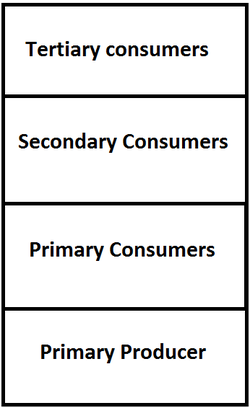 | The Tertiary consumers eat the secondary consumers. This pattern continues. The secondary consumers eat the primary consumers The primary consumers eat the primary producers The primary producers take in sunlight and convert it to energy. |
Biospere
The biospere can be described as 'our living world'. It is is any place in which life exists. Which means it includes our mountains, deserts, forests, cities and any other place humans or other living organisms have been on this planet(or any other planet). As well as this it includes the depths of our oceans and the atmospere in which birds and insects can be found. Mount Hotham is obviously part of the biosphere as life and ecosystems are clearly found there. As well as the obvious animals, plants and organisms which inhabit Mt Hotham, the birds and insects are a big part of this section of the biospere and they can be often found in the atmosphere.
Diversity
Diversity means "a range of different things". In terms of environmental studies, diversity can be broken into two areas; biodiversity and ecosystem diversity. Biodiversity means a range of different species. Mt Hotham has a relatively low biodiversity, due to the higher altitude and harsher weather, the number of different species is a lot lower than the base of the mountain around Harrietville.
Ecosystem diversity is the variety of ecosystems in a given place. With each different landscape/terrain their are different interconnected ecosystems. As with biodiversity, Mt Hotham would have a relatively small level of ecosystem diversity due to the extreme weather that can occur during winter. This weather also contrasts greatly to the hot summer weather making it a challenging environment to survive in. Overall Mt Hotham has relatively low diversity between and throughout ecosystems due to the weather patterns.
Destruction to the environment
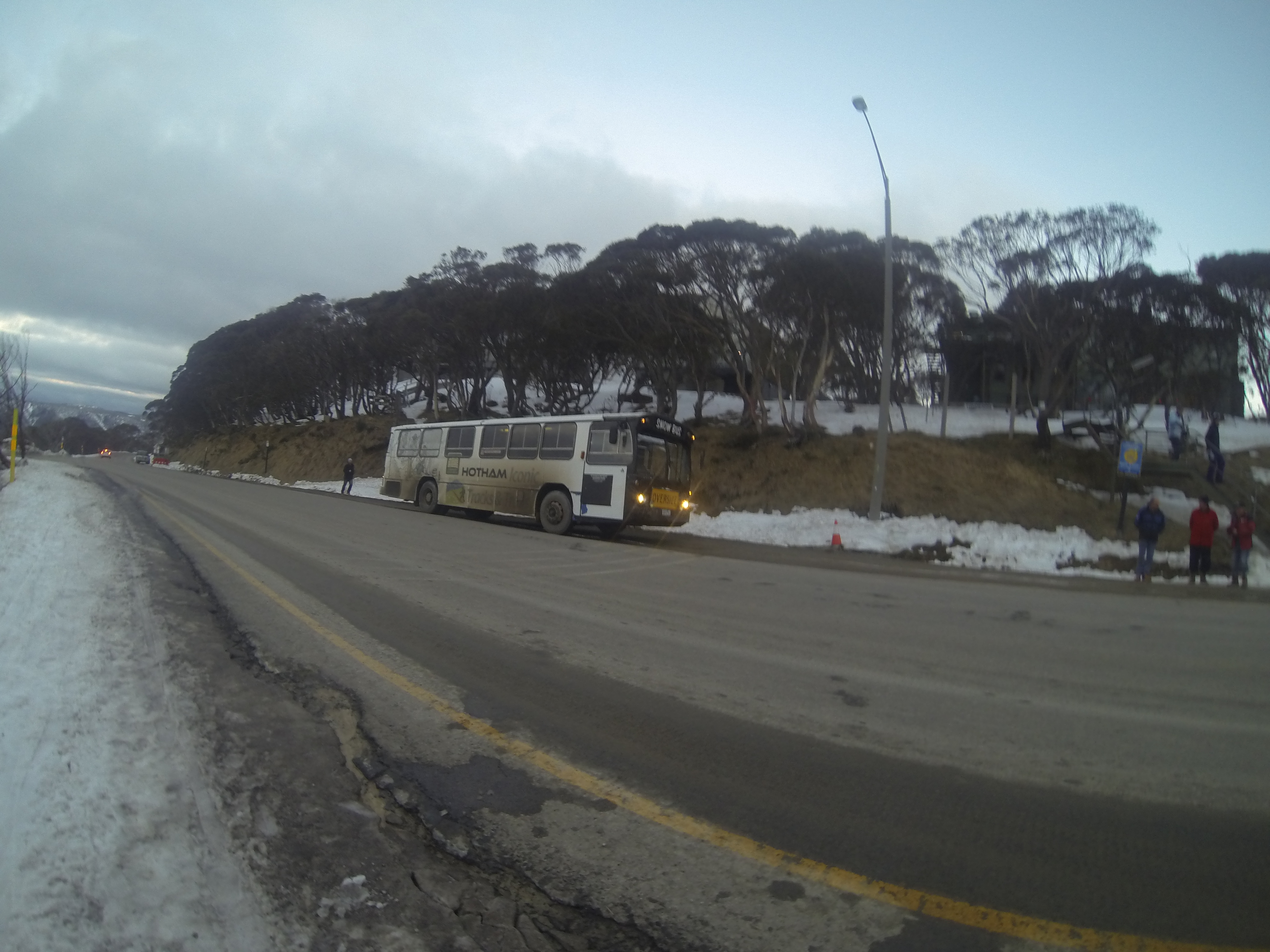
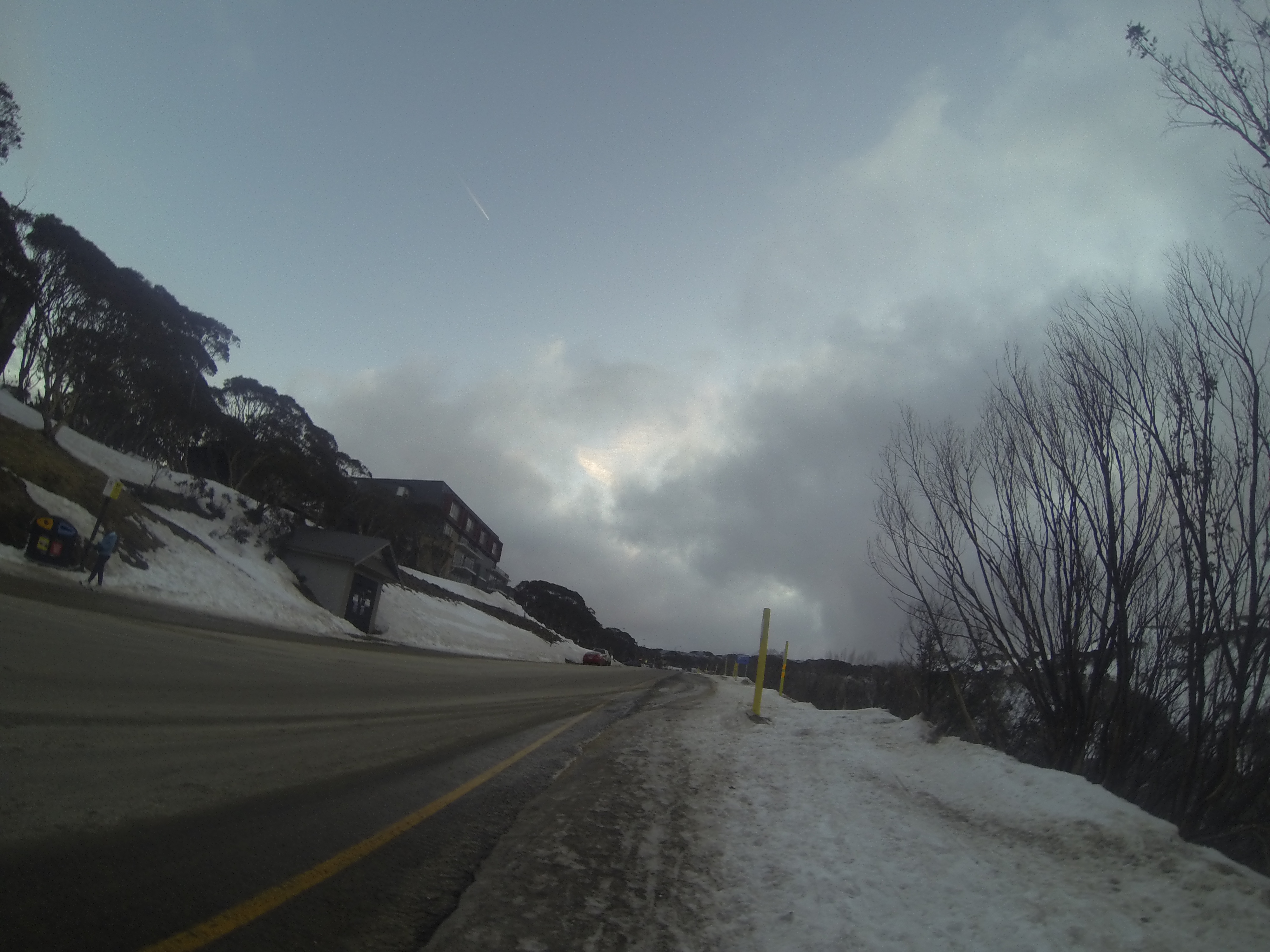
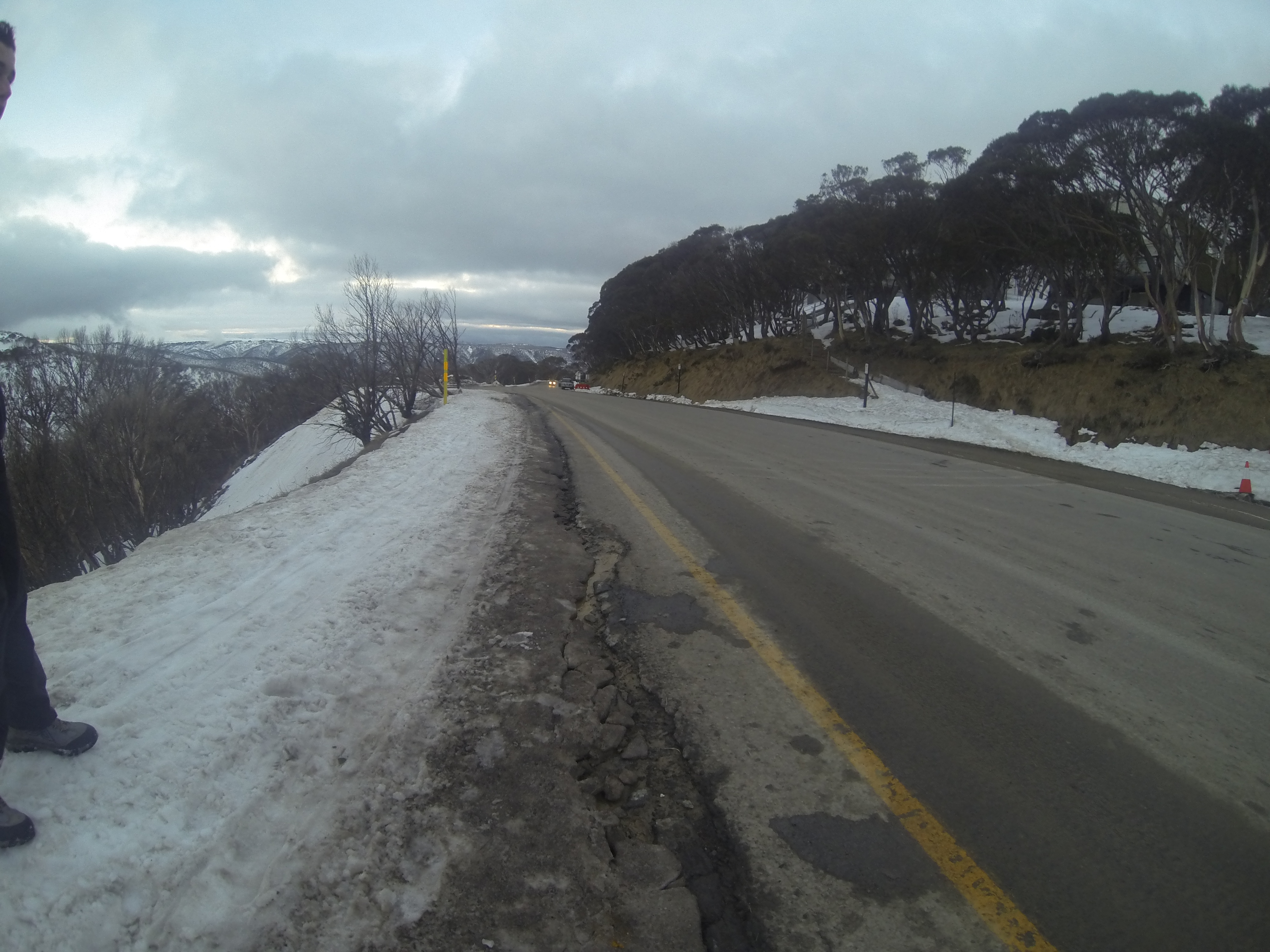
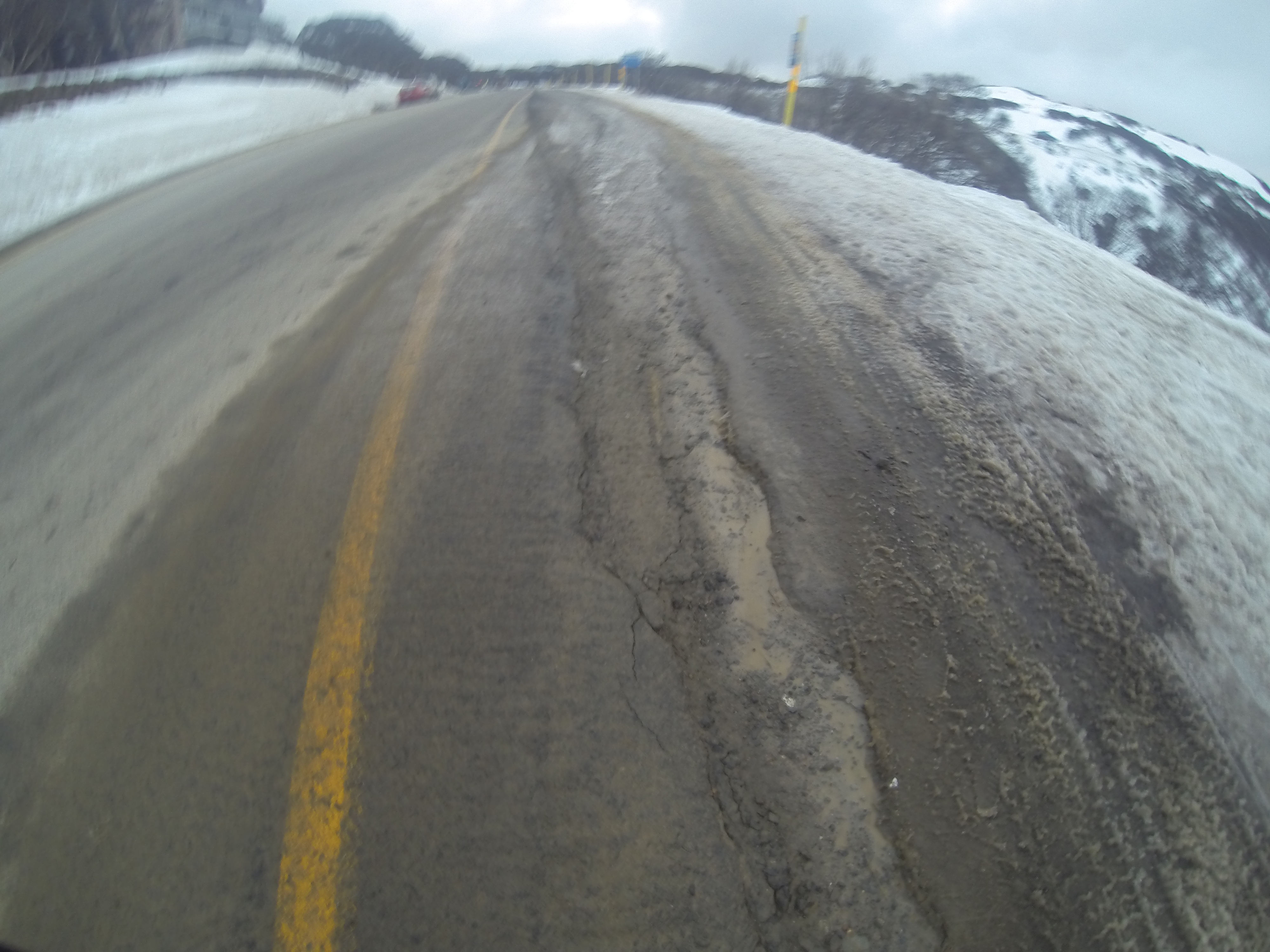
These photos clearly demonstrate a clear problem at Mt Hotham. The roads up there deteriorate a lot faster than normal roads due to the ice. The ice sticks to the bitumen and as it melts, it takes away some of the asphalt with it. This means that as the ice melts, the bitumen contaminates the melting water and gets into the waterways. This pollutes the waterways and damages habitats of animals and insects. Although this is not a major problem as the percentage of snow melting to polluted waterways (from the bitumen) is quite low.
Mt Hotham Visual
Mt Hotham has requirements that ensure the environment is not visually scarred. The lodges/apartments and other buildings are painted and built in a way which makes them blend in (as much as possible) with the environment. They are generally painted in green, white and blue shades.
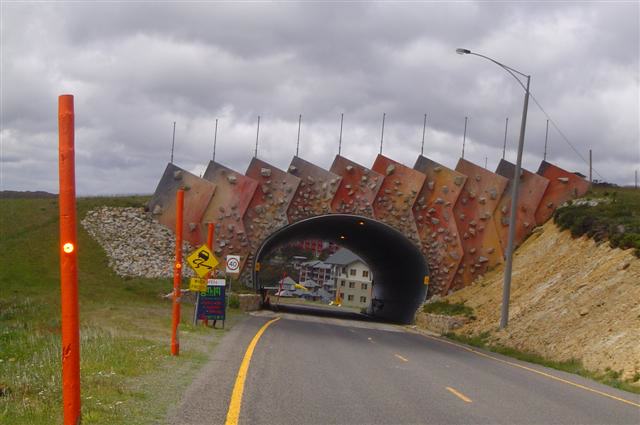
Another clear example of how the resort has made an effort to blend in infrastructure, is the Sun Run bridge built over the top of the road. This bridge (pictured below in the summer), blends in with the clay and rocks.
Noise damage in Mt hotham
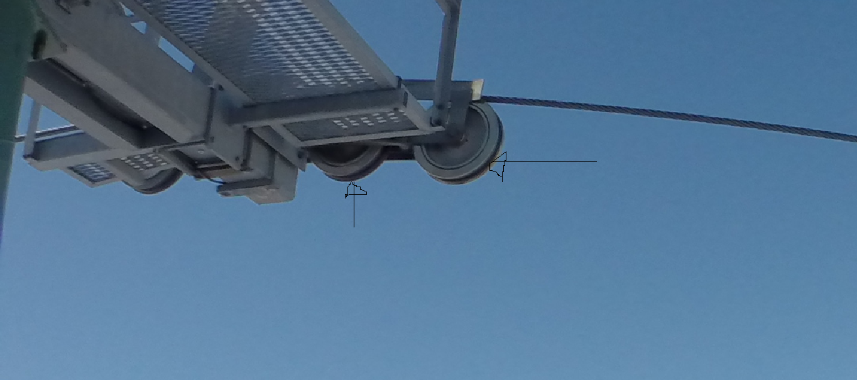
The Mount Hotham resort does many little unnoticed things, which ensure greater sustainability on Mt Hotham. Often these little things are a combination of safety and Functionality (see Venn diagram on 'Home' page). Or else their main function is for safety, however, this simultaneously reduces the impact on the environment. The picture above highlights this case. Along all the rollers on the chairlift, their are pieces of rubber padding which primarily work to reduce the pressure on the wires. However, a secondary function of these pieces of rubber, is to minimise the noise. This means that the chairlifts are actually relatively quiet (aside from the engine) and they do not disturb the surrounding habitat as greatly.
Change
Overall, Mt Hotham has undergone a massive change since the early 1900's. It has gone from 'just another peak among the Australian Alps', to one of the biggest tourist destinations in Australia. During this time a lot of infrastructure has been built. Here is a list of infrastructure built (in a rough order) and damage done to the area from the early 1900's onwards:
- Road to Mt Hotham upgraded ('25)
- Area's were cleared for ski fields (early 30's)
- Ski lodges/clubs were built (40's)
- Emergency radio communications installed ('51)
- First Ski tow installed ('51)
- Ski lifts began to be built (mid 60's)
- After ski lifts began to be built, the mountain took off and yearly visitors began to increase exponentially
- This obviously lead to a lot more infrastructure
- During the 90's the Alpine Resort's Commision (the group which managed the crown land) recognised that more needed to be done for the surrounding environment and in 1997 the first environmental management plan was put in place.
Due to these factors flora and fauna have had to adapt to survive in the area. Lots of animals, such as birds have done this and found new sources of food through humans and other species, like the Mountain Pygmy Possum have struggled and become an endangered species. During the last twenty years, Mt Hotham is taking measures to minimise the impact on the environment.