
 Hotham Minimal Impact |
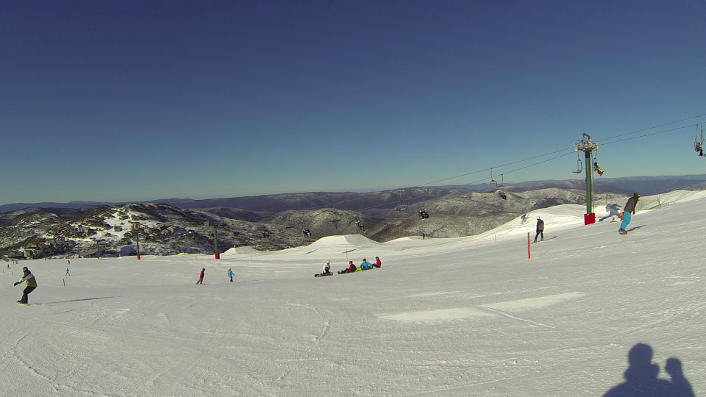
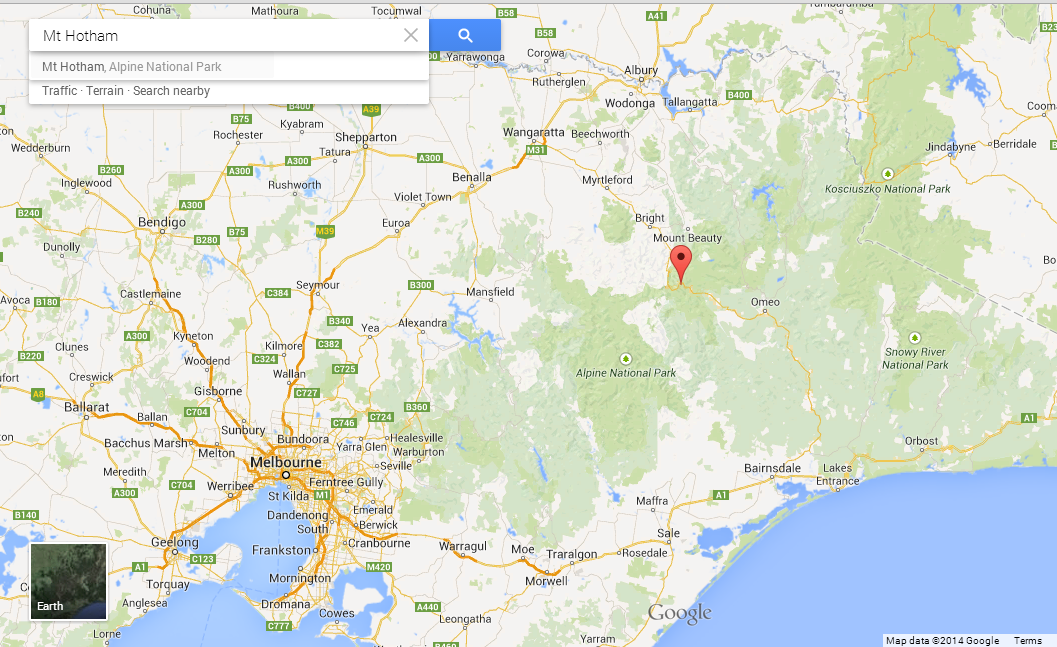
Minimal Impact on Mt hotham.IntroductionMt Hotham is one of the busiest ski resorts in Australia. It sits at an elevation of 1861m and includes 320 ha of ski area. It has thirteen lifts and is open to skiers and snowboarders for about 110 days of the year. The mountain can sleep up to 7000 people (inc dinner plain) and is only 360 Km from Melbourne. This means that it gets thousands of visitors each year and is one of Australia's favorite ski resorts. Sustainability on Mt HothamMt Hotham has an incredible and unique array of flora and fauna. It is home to 342 native flora and aprox 110 species of native vertebrate. This means that the mountain must be managed in a way which is environmentally stable and ensures future sustainability. This is a high priority in the region of Mt Hotham, due to it's large numbers of visitors and unique environment. This website will outline and advise on some of Mt Hotham's key environmental initiatives, as well ways in which all visitors can ensure Mt Hotham is a sustainable resort. Mount Hotham AreaMount Hotham resort is on Crown land. It is part of the Alpine shire and is run by the Mount Hotham resort management board. Before been claimed by anglo-saxans, Mt Hotham was inhabitant at certain times of year by indigenous tribes who spoke Gunai Kurnai, Dhudoroa and the Jaitmathang. These tribes obviously inhabitted the area seasonally(in the summer months) and would not stay high up in the alpine region for long periods of time. While in the high country the would feast on food such as the 'Bogong moth' and tell Dreamtime stories about the flora, fauna, geography and seasonal conditions. Although many tribes did meet up at Mt Hotham, the Gunaikurnai people(Gunai Kurnai language) were the most common. Caring for the Australian AlpsSome basic things you can do when camping, to keep the alps good for future generations
  The Mount Hotham resort management board runs Mt Hotham. Although the land is on crown land, this board is the primary leaders of Mt Hotham. The Mount Hotham Resort Management board prides itself on Environmental Management. They make it a priority and they are often undertaking investigations, audits and feasibility studies into potential ways in which Mt Hotham's environmental footprint can be improved. Carbon Management & Energy EfficencyThe board is currently undertaking a feasibility study into an alternative into energy production. They have already previously done a feasibility study into wind turbines and currently a hydro-electricity scheme is been proposed at Swindlers Creek. Mt Hotham Resort Management has 25 electricity accounts around the resort, in 2011/2012 the accounts produced 1740 Tonnes of greenhouse gas emissions. These emissions were produced by LPGas, Diesel, unleaded petrol and in particular electricity. Although this is still a big number, it has decreased significantly since the 2010/2011 figure of 1906.8 tonnes of greenhouse gas emmisions. FUNCTIONALITY, MINIMAL IMPACT AND SAFETYThroughout Mt Hotham, the board has put many resources in place for specific purposes. Each resource serves a purpose, or possibly multiple. Many of the reason's behind the implementation of these resources fall under three categories; Functionality, minimal impact and safety. Many of these resources fall under two or three of these categories. The following Venn Diagram will demonstrate the links between resources on Mt Hotham and what purpose they have. 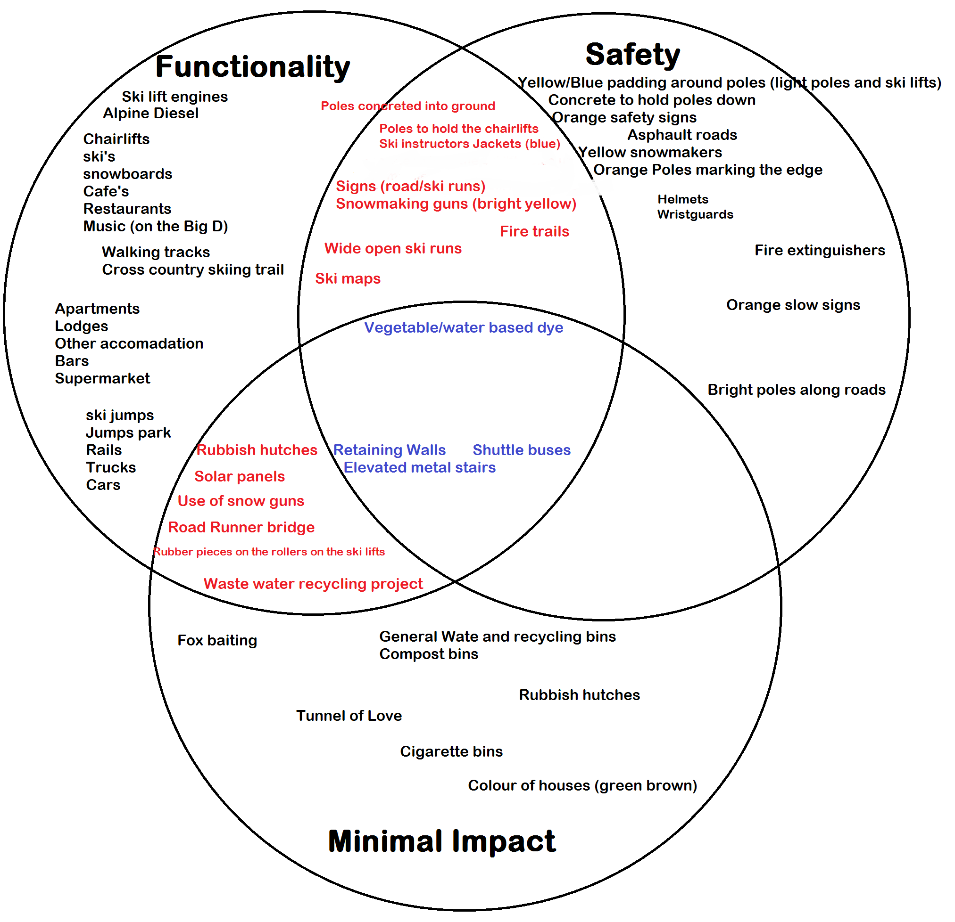 Bibliography
|
|
|

